GOAT PROTECTION
Growing up, it took
me almost eighteen years of my life to realize that there is no need to
slaughter an innocent and defenseless animal in order to fill one’s belly
with cadavers. Three decades later, I am still glad that I made that
decision to become a strict vegetarian.
As soon as I
understood the incredible suffering billions of animals have to endure just
because they can’t defend themselves and because hardly anyone hears their
screams, I always felt a strong urge to help them.
Soon after I made that
decision, I began a journey of consciousness which led me to India where I
was able to deepen my understanding of protecting the lives of animals.
Entire civilizations of ancient times depended on animals like cows or
goats. The very backbone of the original Indian agriculture was the
symbiotic and harmonious working relationship between farmers and their
cattle. Bulls were used for plowing the fields, cows utilized for their
excess milk. In return, they were considered to be sacred and they were
well protected.
From that time
onwards, I became involved with various projects that were dedicated to cow
protection. Along with it, I promoted vegetarianism on TV shows, on the
radio and helped to distribute tens of thousands of pamphlets or books
about vegetarianism.
In the early 1990’s I
wrote a booklet called “Vegetarianism
in the World Religions” which was distributed by the thousands
and translated into various languages. In essence, the study proved that
vegetarianism was considered to be a desirable ideal in all prominent world
religions.
When I came to Puerto
Rico ten years ago and began to develop my farm, I had planned to do
something for cow protection but since my farm is simply not suitable to
keep cows, I just continued to write in their defense. I dedicated a part
of one chapter of “Oro
Verde – Securing the Future of our Food” to animal protection.
I still did not feel
satisfied and finally decided to keep and protect at least some goats (who
are also known as “the poor man’s cow”), not just as pets but as integral
helpers at my farm. My commitment is to give them optimal housing, food,
company and care and in return, I accept their valuable milk, manure and
occasionally their help with the unending weeding work here.
I hope that their
existence here will inspire at least some of the hundreds of visitors who tour my farm
every year and even more who visit in cyber space.
If you live in the Caribbean and are
thinking of becoming a first time goat owner, you may enjoy this brief
article. ( click here for article )
At this point I want
to thank all those goat keepers around the island who helped me to deepen
my understanding about how to give them the best possible care. I also
thank all those friends who helped me with the required construction work
for the goat area at my farm.
I hope you enjoy the pictures. The
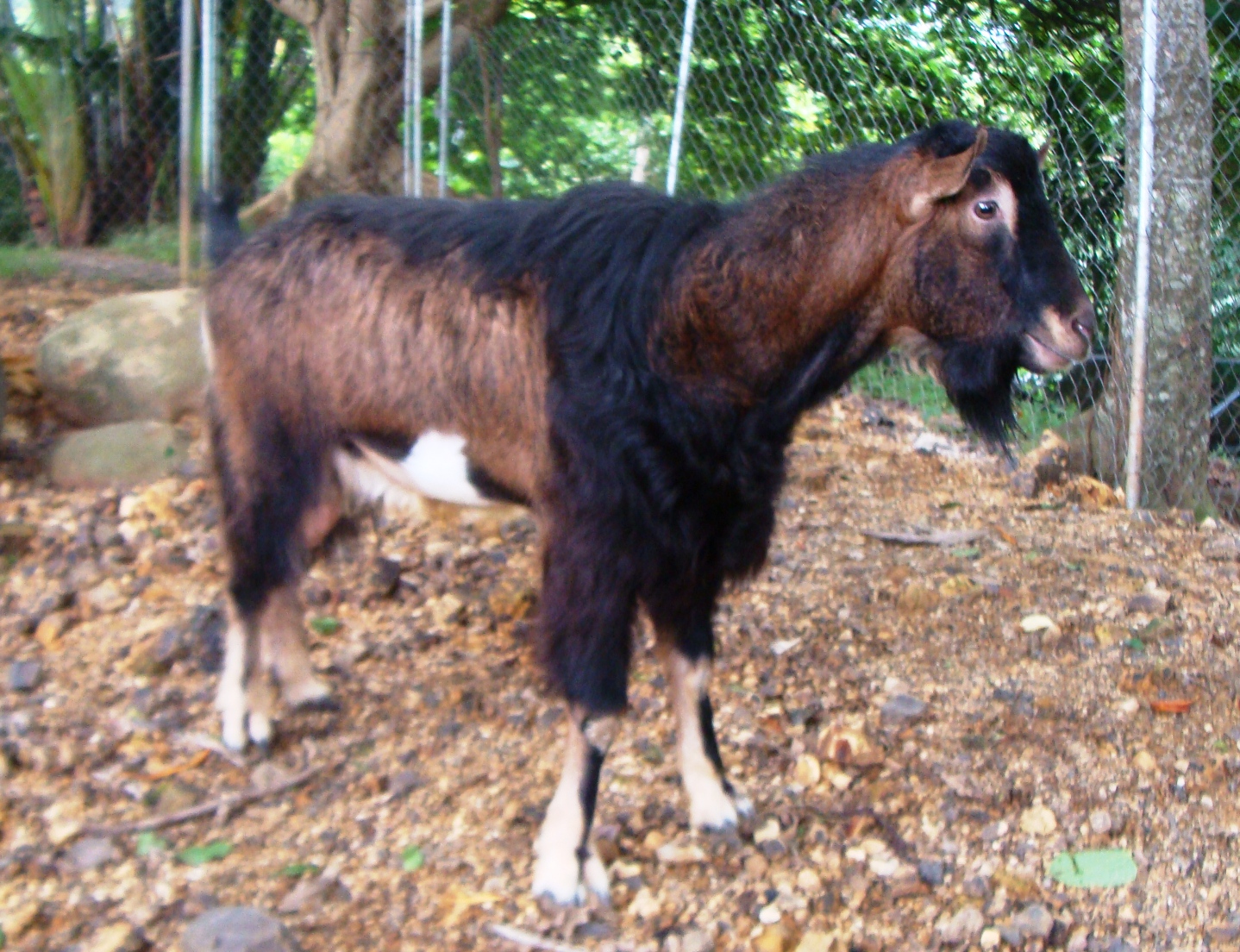
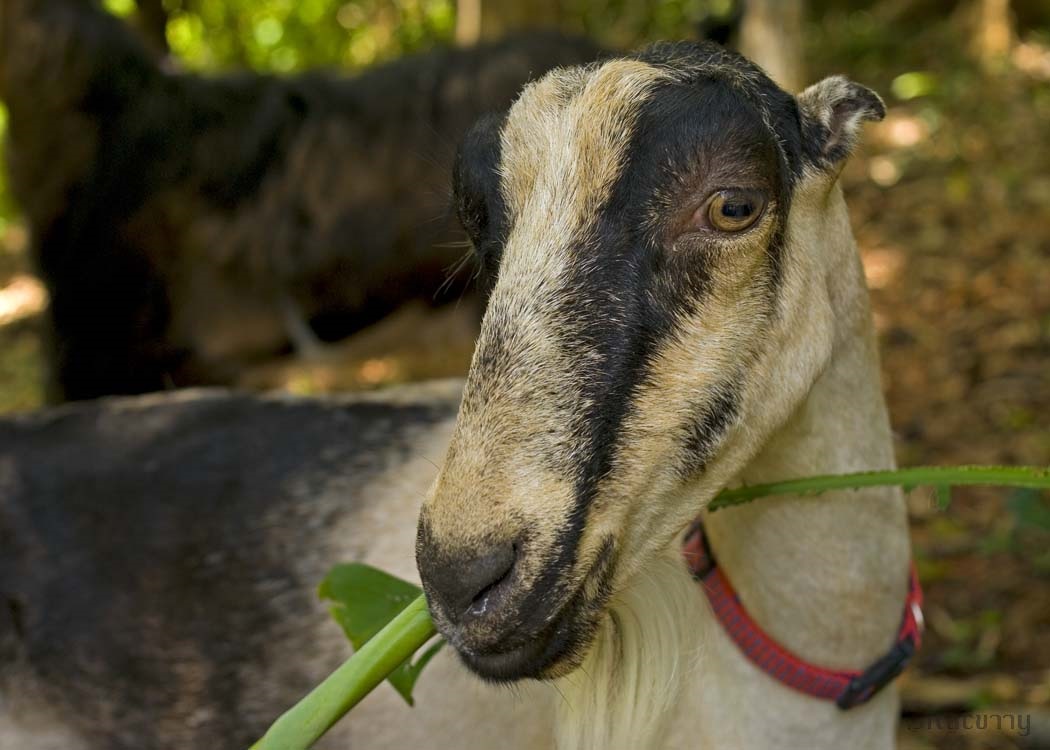
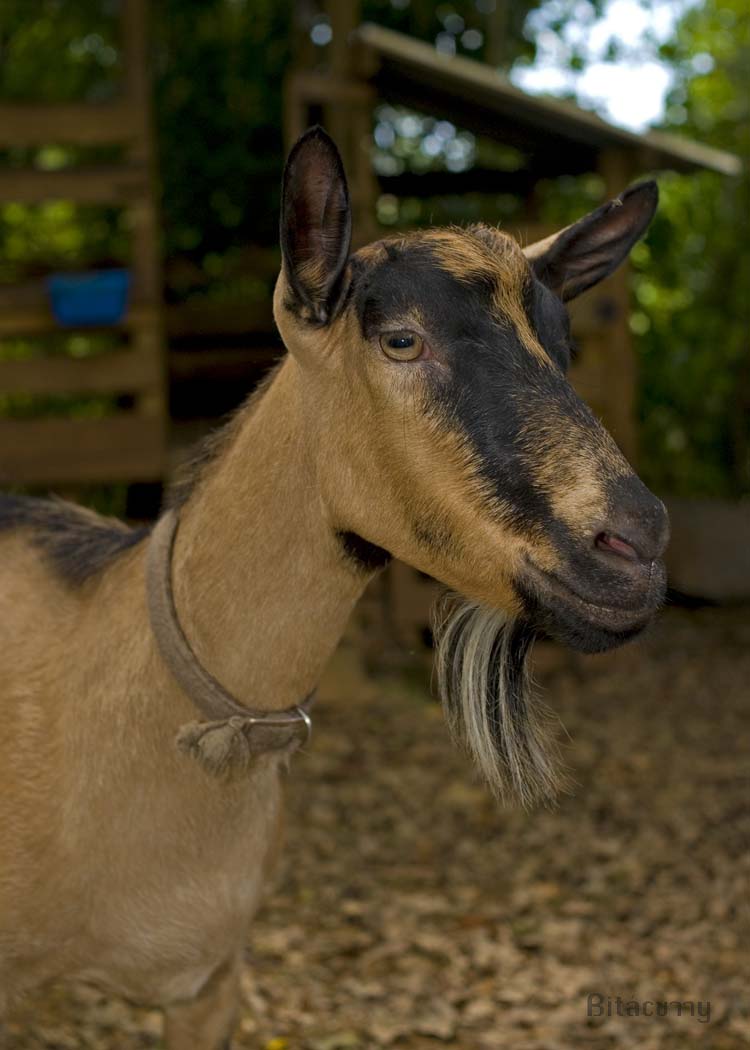
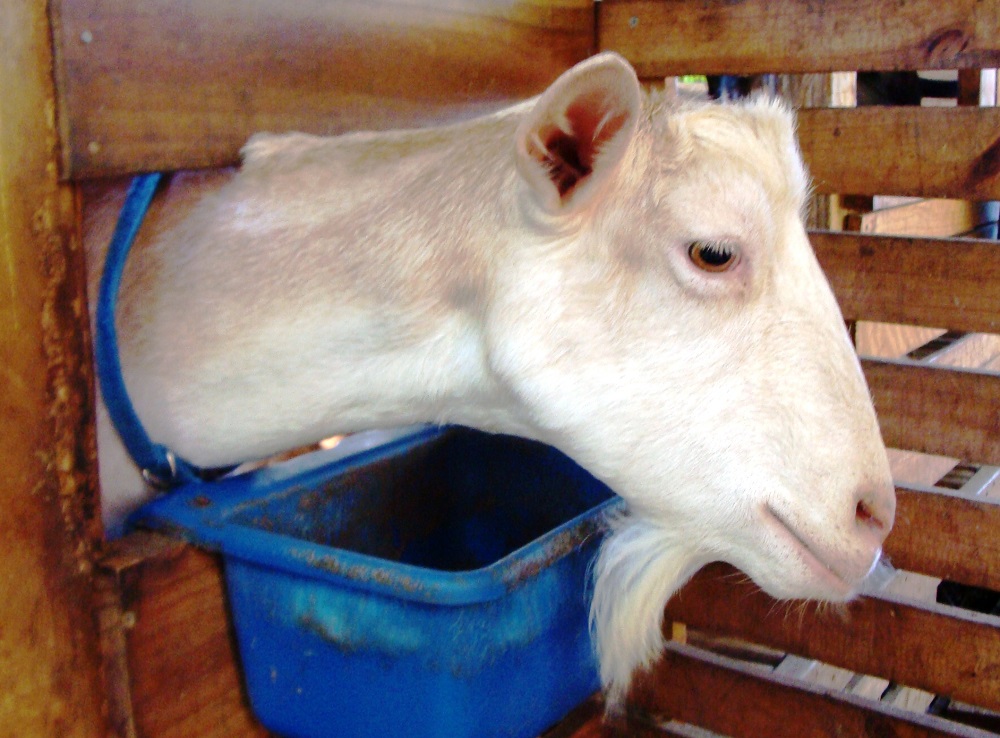
current goats residing at Govardhan Gardens are Sundari
(Sanskrit for "beautiful"), Kumari (“young
girl”), Mohini ("bewildering
beauty") and a high quality Alpine breeding
buck,
Mohan ("enchanter",
"attractive").
I
will continue to post pictures and general goat information for the
tropics. If you would like to adopt or sponsor a goat, you can contact me at
any time. If you would like any of the future goat kids, the
next ones will be available by mid March of 2015 (
Goat Kids
Page ).
If
you have questions about ethical and sustainable goat keeping in the
tropics, please feel free to write to me.
GOVARDHAN GARDEN'S GOATS
2013
1) Mohan (Alpine
breed; Mohan is the main sire).
2) Kumari (La Mancha
breed, primarily recognized by their small ears)
3) Sundari (Alpine
breed, recognized by their upright ears and colors)
4) Mohini (A
beautiful cross between a Saanen and a brown Alpine)
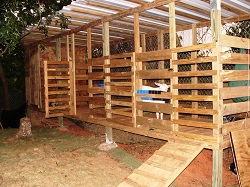
5) Govardhan Gardens Goat Shed
|